Flat lakeshore laterals, frozen cottage traps, sagging subdivision lines and spring water rising at the basement drain. We clear drains for Keswick homes and cottages and show you why the line backed up.
Most Keswick drain calls come down to flat ground and the age of the house. Off The Queensway, off Church Street and toward Roches Point, many laterals have little slope, so grease and silt settle and a line cleared in fall slows again by spring.
Many lakeshore homes began as cottages, their drains joined to the sewer decades ago and never replaced. Subdivisions built from the 1990s around Glenwoods, Biscayne and Simcoe Landing use plastic pipe, and where the ground has settled, a length can sag.
AquaTec Plumbing identifies the line before choosing a fix. See also our Keswick plumber page and drain cleaning across York Region.
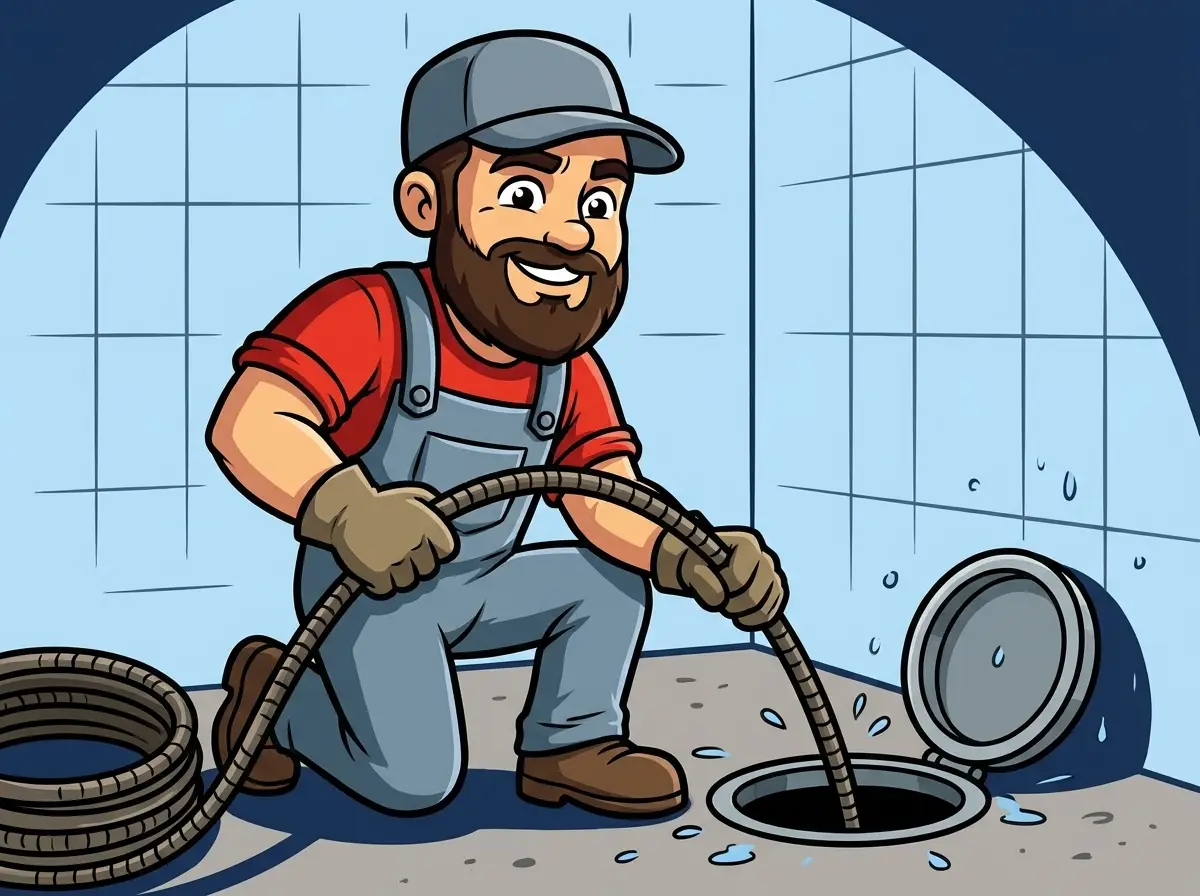
One slow fixture is usually a short job, once we know how far the problem reaches.
The trap comes off first. If it is clean, a small drum machine clears the wall line, and a full basin proves the flow.
A thin cable through the drain or overflow spares the finish; the hair or soap it pulls back shows the cause.
Lint sludge coats the standpipe. After we clear it, a full washer drain cycle tests the line harder than any sink could.
Sand on the cable can mean outside water is getting in; water standing at the grate after clearing points toward the main line.
Several fixtures backing up together mean a main sewer line clog; for one basin, see clogged sink repair. For the cable service itself, see drain snaking and drain auger service.
A cable bores a path, but on a flat line the grease and silt left on the wall soon close it.
A nozzle sized to the pipe goes in from the cleanout, rear jets pulling it along as the spray scours the wall. Short, overlapping passes let the flow carry loosened silt away.
Cottage-era laterals get a camera first, since pressure can widen a cracked joint. Jetting cleans a sag but cannot lift it. See hydro jetting and drain camera service.
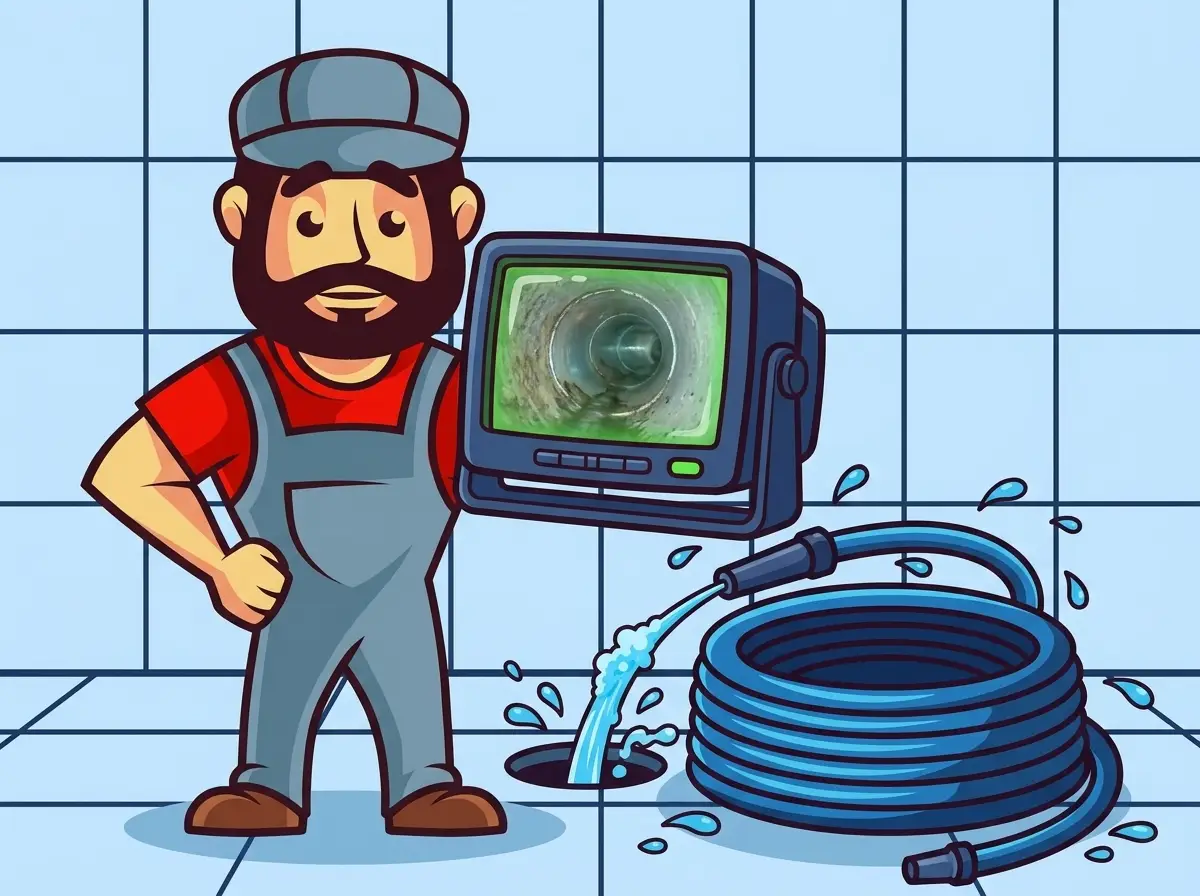
With water moving, the camera goes in from the same cleanout while you watch. A distance counter and locator signal let us mark each fault and its rough depth on the ground above.
We replace what failed and leave sound pipe alone.
A separated joint or cracked length is dug out at the mark and replaced on firm, sloped bedding; faults along the whole run mean a new lateral. If the fault sits near the property line, check with the municipality about who owns that length of pipe.
A spring trench on a low street fills from below, so we keep it small and pumped. Drains stay off while the lateral is open, and the new pipe is filmed before backfill. See sewer line repair and replacement.
A drain that worked in October but not on a January morning is usually frozen, not clogged.
Traps and shallow runs in vented crawl spaces sit in unheated air, so standing water in a trap or low spot can freeze.
Warm air and gentle heat on the pipe. No torch, no boiling water, no chemical cleaner on the ice.
Re-slope the run to drain dry, insulate or enclose it, or move the trap into heated space.
Decades-old cottage pipe gets a camera before a jetter, and frost cracks show plainly.
Supply pipes freeze there too: read keeping pipes from freezing in York Region.
On Keswick's lower streets the water table rises with the melt, and three problems can surface at the floor drain.
Some properties toward Ravenshoe Road are on septic rather than the municipal sewer, and that changes what a slow drain means.
A main drain heading toward the road usually means sewer; a tank lid or risers in the yard mean septic. Unsure? Our locator finds where the line ends.
We clear and film the drain up to the tank inlet and stop there: a cable can break a baffle, and jetting past the tank drives solids into the bed. A clear line that still drains slowly needs a septic contractor.
Access, how far down the line the blockage sits and what the camera finds set the price.
We look first, then give a written price before any work. Backed-up drains get 24/7 emergency plumbing: 289-470-6221.
Tell us which fixtures are slow and whether you are on sewer or septic. Call now or book online.